Puntacana Foundation inaugurates the Marine Innovation Center, marking its most ambitious chapter in more than three decades of coral reef conservation.
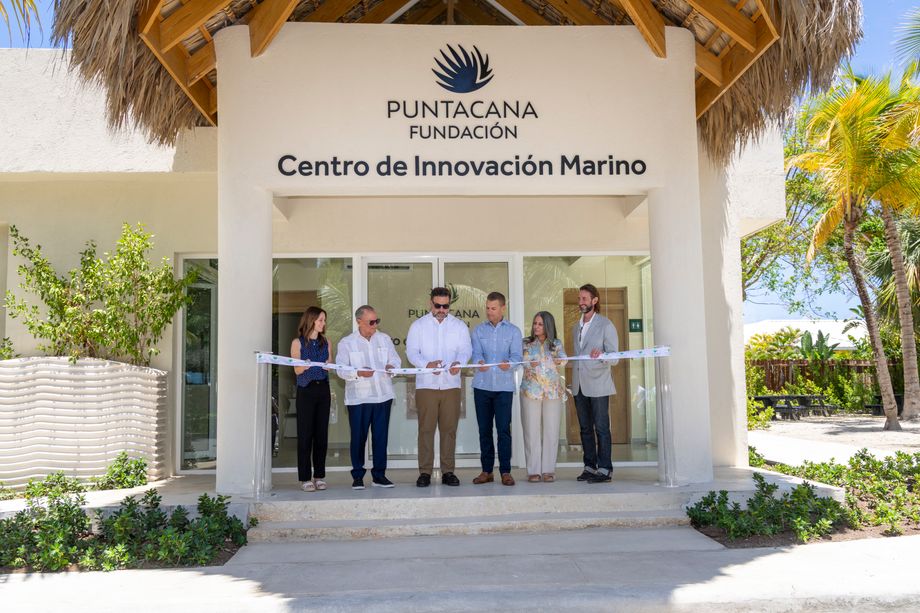
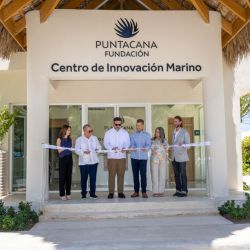
Punta Cana, Dominican Republic. - Puntacana Foundation inaugurated today the Marine Innovation Center (MIC), a modern facility designed to promote research, environmental education, and the restoration of coral reef ecosystems throughout the Caribbean. Located in Playa Blanca, within Puntacana Resort, in one of the country’s most emblematic coastal areas, the MIC represents the next step in a conservation commitment that began more than thirty years ago.
The inauguration, held במסגרת Earth Day on April 22, 2026, brought together partners from the environmental, business, and philanthropic sectors, including Grupo Puntacana, the Dominican Foundation for Marine Studies (FUNDEMAR), The Nature Conservancy (TNC), and Oceankind, as well as the Minister of Environment and Natural Resources of the Dominican Republic, Armando Paíno Henríquez.
The MIC features a specialized laboratory with 32 tanks, with capacity to expand to 64, which will support coral restoration, marine monitoring, and the reproduction of key reef species. This facility integrates controlled laboratory environments with active programs in the adjacent marine sanctuary, enabling scientists and technicians to move quickly from research to field application.
Coral reef restoration in the Caribbean has historically faced a fundamental contradiction: traditional techniques rely on extracting fragments from natural populations that are already in decline. This new center was designed to directly address this challenge, incorporating tools such as machine learning for coral health monitoring, molecular biology for disease detection and prevention, assisted evolution, and sexual reproduction techniques to develop more resilient corals. The goal is not only to restore reefs, but to do so at the speed and scale required by their accelerated loss.
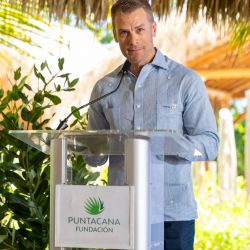
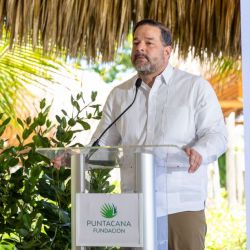
“Puntacana Foundation has spent more than thirty years restoring corals, training young scientists, working with fishing communities, and developing environmental education programs. That work does not begin with this building,” said Jake Kheel, Vice President of Puntacana Foundation. “What the Marine Innovation Center provides is a more robust platform, with better tools, more partners, and greater reach. Grupo Puntacana made the land available to build it here in Playa Blanca, one of the most visited destinations in the Caribbean, creating the opportunity for the public to see firsthand what is at stake with the loss of coral reefs.”
Beyond its scientific mission, the MIC will open a permanent interactive exhibition to the public this summer, inviting both resort visitors and the broader community to learn about the threats facing reefs and the solutions being developed to protect them. Puntacana Foundation has maintained that scientific credibility and citizen engagement strengthen each other, and that lasting conservation requires not only better tools, but also a society that understands the importance of reefs.
The Center also serves as the anchor institution of the Dominican Republic’s Marine Innovation Hub, a national platform that brings together Puntacana Foundation, FUNDEMAR, and The Nature Conservancy under a shared mission of applied research and large-scale reef restoration. This Hub, supported by Oceankind, operates through two world-class facilities: one in Punta Cana and the FUNDEMAR laboratory in Bayahíbe, and is actively working on developing a legal and financial structure to ensure its long-term sustainability.
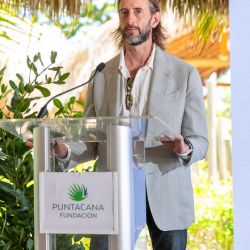
“The scale and speed of reef loss in the Caribbean demand a new approach to restoration—one that moves beyond small, isolated projects and advances toward resilient, innovative, and scalable solutions,” said Dr. Rob Brumbaugh, Executive Director of The Nature Conservancy’s Caribbean Division. “Our partnership with Puntacana Foundation and the creation of the Marine Innovation Center demonstrate what is possible when science, conservation, and private sector leadership align around a shared commitment to the ocean. Together, we are showing that large-scale, climate-focused coral restoration can generate real impact today and serve as a model for the Caribbean and beyond.”
The Marine Innovation Center was made possible through the vision and investment of Grupo Puntacana, the philanthropic partnership with Oceankind, and numerous private donors from the Puntacana Resort community, as well as the scientific collaboration of The Nature Conservancy, FUNDEMAR, and a network of international partners.
Likewise, the inauguration also featured a Moda Jumbo pop-up, where its latest collection “Pez Loro,” developed in collaboration with Sócrates McKinney, was presented. Inspired by the key role of this species in reef ecosystems, the collection promotes its protection and discourages its consumption. Under the concept “the parrotfish makes the sand and we raise awareness,” the collection turns fashion into a platform for environmental education. Through this initiative, Jumbo, along with other companies, joins efforts to promote actions that protect our ecosystems and foster greater environmental awareness.
About Puntacana Foundation
Puntacana Foundation is a non-profit organization established in 1994 with the purpose of protecting and restoring the natural resources of the Punta Cana region and contributing to the sustainable development of the Dominican Republic. For more than thirty years, it has led one of the largest and longest-running coral reef restoration programs in the Caribbean, has co-managed the SAMAR marine protected area, and has developed environmental education and community engagement programs that impact fishing communities, students, and visitors along the country’s southeastern coast. The Foundation operates at the intersection of private sector leadership and conservation science, collaborating with strategic partners from the public, private, and civil society sectors in areas such as reef conservation, endangered species protection, solid waste management, ecotourism, education, health, and community entrepreneurship. More information: puntacana.org